Category: Reference material

  • 2021 CHAS Chat Topics Survey Results

    2021 CHAS Chat Topics Survey Results

    52 CHAS members responder to our survey of interest in potential 2021 CHAS chat topics. The average response for each potential topic are in the table below, with “10” being most interested and “1” least interested.

    Potential 2021 CHAS chat topics

    TopicInterest level (1-10)
    Best sources of safety information for chemicals7.63
    Hazard Assessment in the research lab7.58
    Specific examples of RAMP in action7.35
    Online resources for learning safe chemistry techniques7.21
    Best practices for at-the-bench training6.88
    Teaching chemical safety and risk assessment in virtual labs6.75
    Chemical Safety for Biologists6.73
    Fire codes and flammable/reactive limits6.60
    Planning for and Recovering from Emergencies6.54
    Overview of new ACS chemical safety education resources6.50
    Working alone policies and practices6.50
    Safety in Nanotechnology6.15
    Safe Reaction scale up considerations6.12
    The role and impact of covid masks (in public and in the lab)6.10
    Safety in community outreach6.09
    Strengths and limitations of PubChem LCSS5.98
    EH&S as a career option5.94
    Uses of ACS Style Guide chapter5.79
    Safety in the performing arts5.42
    Service Animals in the Lab4.94
    Process Safety in the Pharmaceutical Industry4.82
    High School Safety related resources4.60

  • Webinar: Lessons learned from Beirut and Ammonium Nitrate

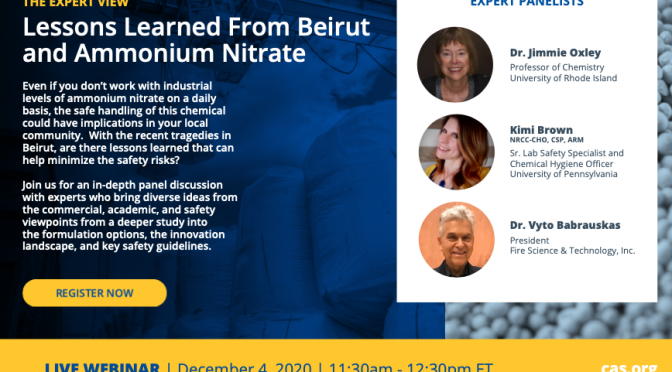
    Webinar: Lessons learned from Beirut and Ammonium Nitrate

    CAS will be hosting a webinar on Friday, December 4th at 11:30 EDT.

    The Expert View – Lessons learned from Beirut and Ammonium Nitrate:

    Register here: https://www.cas.org/science-connect/ammonium-nitrate

    Even if you don’t work with industrial levels of ammonium nitrate on a daily basis, the safe handling of this chemical could have implications in your local community. With the recent tragedies in Beirut, are there lessons learned that can help minimize the safety risks?

    Join us for an in-depth panel discussion with experts who bring diverse ideas from the commercial, academic, and safety viewpoints from a deeper study into the formulation options, the innovation landscape, and key safety guidelines.

    Panelists:

    • Dr. Jimmie Carol Oxley, professor of chemistry at the University of Rhode Island
    • Dr. Vyto Brabauskas, President of Fire Science and Technology
    • Kimberly Brown, Sr. Lab Safety Specialist and Chemical Hygiene Officer, University of Pennsylvania

    Date: December, 4th 2020
    11:30am – 12:30pm ET – Register to join live or access the recording at a later date: https://www.cas.org/science-connect/ammonium-nitrate

  • What is a Culture of Safety and Can It Be Changed? : Safety Journal Club Discussion, Nov 17, 2020

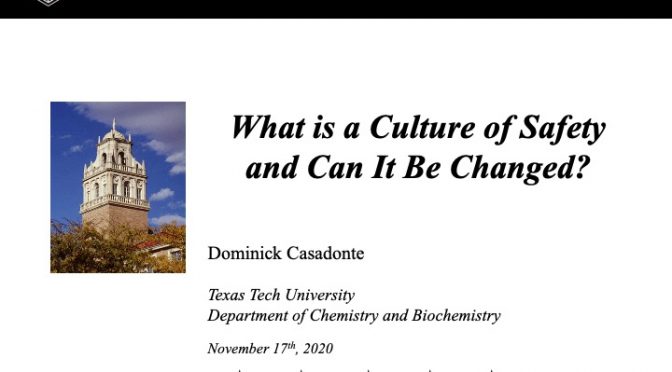
    What is a Culture of Safety and Can It Be Changed? : Safety Journal Club Discussion, Nov 17, 2020

    Led by:
    Dominick Casadonte, Texas Tech University Department of Chemistry and Biochemistry

    You can download Dr. Casadonte’s powerpoint file here.

    [office_doc id=5125]

    Resources discussed in the talk:

    CONVERSATION HIGHLIGHTS

    When an accident like this (2010 Texas Tech) happens, it is a system failure.

    Before the 2010 accident, we had a lackluster safety committee; it was a way to be on a committee, but not do any actual work.

    EHS now has a much heftier line item in the budget for safety.

    Faculty, staff, and graduate students are required to take and pass a biannual safety exam. The exam is randomized each time a person takes it from a question bank of ~250 questions. Everyone is required to take this biannually.

    Q: What are the consequence if a faculty member does not pass the biannual test?

    A: Taking and passing the test is tied into the HR system. If they don’t complete it, they don’t get paid. We had a little trouble in the beginning, but now have 100% compliance.

    Texas Tech does not have unions.

    The average lab group at Texas Tech has ~10 people in it.

    Now working on developing effective “safety award” programs to use as carrots in the system.

    Q: Could the safety award programs introduce perverse incentives?

    A: We haven’t yet seen evidence of this. A faculty representative from every lab/work area with a safety concern is represented on the committee, so the test has broad support.

    Q: Have you employed any means of measuring the graduate researcher perspective on the changes that have been made at Texas Tech since the 2010 incident?

    A: When writing the 2 perspective articles for ACS Chemical Health & Safety, we decided not to include the graduate student who was injured due to concerns of re-traumatization. We have also not really introduced a specific way of tracking graduate student perceptions. Obviously, we would not have a graduate student population who would have been there for 10 years to compare the time before the accident and now. However, it is interesting to consider if there is some way to capture that perspective to see if graduate students do notice the changes that we have made. Things definitely “feel” different, but have not formally tracked it in any way.

  • Nominations sought for 2021 CHAS awards

    Nominations sought for 2021 CHAS awards

    The American Chemical Society Division of Chemical Health and Safety is now seeking nominations for the division awards described below.  

    **Check out our two new awards for 2021!**

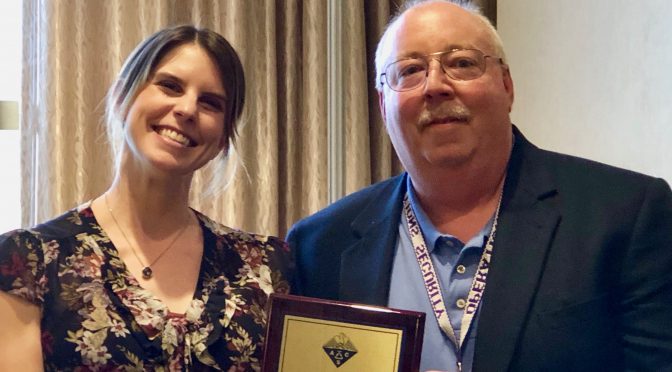
    The deadline for nominations is December 1, 2020.  All awardees will be notified by Spring 2021, and awards will be presented at the National ACS meeting in August, 2021.  Please direct all questions and submit nominations to the Awards Chair, Kimi Brown, at awards@dchas.org.  Nomination application forms can be downloaded from the pages linked below.

    • **New for 2021!** Graduate Students: The CHAS Graduate Student Safety Leadership Award is given to recognize a graduate student researcher or recent graduate (within 3 years of latest degree) who demonstrates outstanding leadership in the area of chemical health and safety in their laboratory, research group, or department. Each year the award is dedicated to a different historical figure in chemical safety. The award consists of $2000 as an honorarium and to support travel to the fall national meeting. An optional, additional $500 will be provided to support a new or ongoing project that promotes graduate student safety at the home school.
    • Chemical Health and Safety Professionals: The Howard Fawcett Chemical Health and Safety Award recognizes outstanding individual contributions to the field of Chemical Health and Safety. The award consists of a commemorative plaque and a $500 prize for expenses so that the recipient can present at an award symposium at the fall ACS national meeting.
    • CHAS Division Members: The Tillmanns-Skolnik Award was established in 1984 to recognize and honor outstanding, long-term service to the Division of Chemical Health and Safety. The award consists of a commemorative plaque and a $500 prize for expenses so that the recipient can present at an award symposium at the fall ACS national meeting.
    • Graduate Research Faculty:  The Laboratory Safety Institute Graduate Research Faculty Safety Award recognizes graduate-level academic research faculty who demonstrate outstanding commitment to chemical health and safety in their laboratories. The award consists of an engraved plaque and a $1,000 prize for expenses so that the recipient can present at an award symposium at the fall ACS national meeting.
    • Undergraduate Lab Safety Programs: The SafetyStratus College and University Health and Safety Award is given to recognize the most comprehensive laboratory safety program in higher education (undergraduate study only). The College and University award consists of a commemorative plaque and a $1000 prize for expenses so that the recipient can present at an award symposium at the fall ACS national meeting.
    • Student Conference Presenters: The CHAS Student Registration Award is given to encourage student participation in CHAS programming at ACS national meetings. The award provides reimbursement in the amount of full-conference registration fee (undergraduate, graduate, or pre-college teacher student rate, as applicable). Two student registration awards are given for each ACS national meeting.

    Nominations are also solicited for special service and fellow awards:

    • Chemical Health and Safety Professionals: The CHAS Lifetime Achievement Award recognizes a lifetime of dedication and service to the American Chemical Society, the ACS Division of Chemical Health and Safety, and the field of chemical health and safety.  The awardee gives a 20 – 30 minute keynote presentation at the Awards Symposium at the fall ACS national meeting.
    • CHAS Division Members: The Fellows Awards recognize CHAS members in good standing who have provided continuous service. Nominees who meet the criteria will receive a certificate.
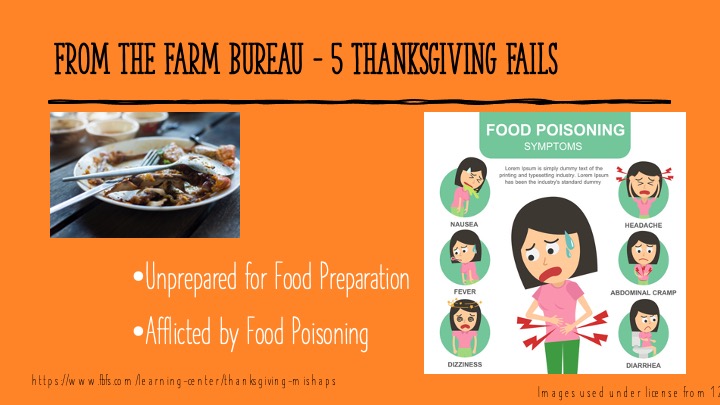
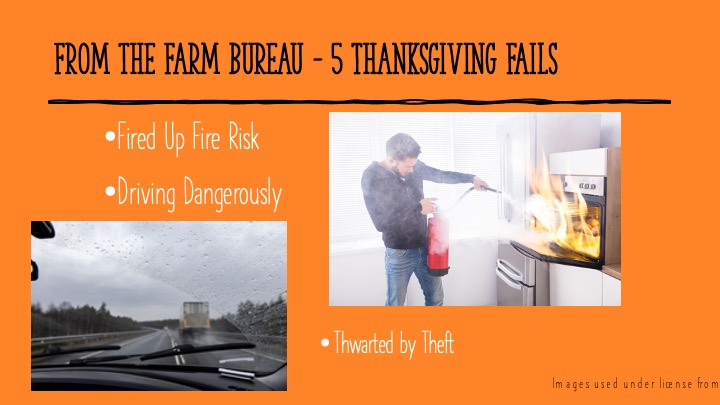
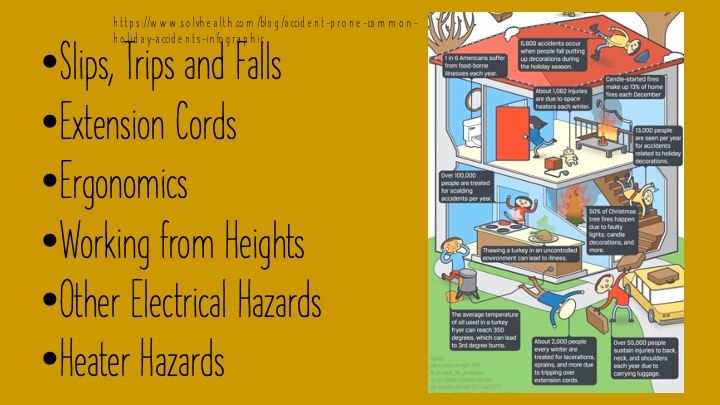
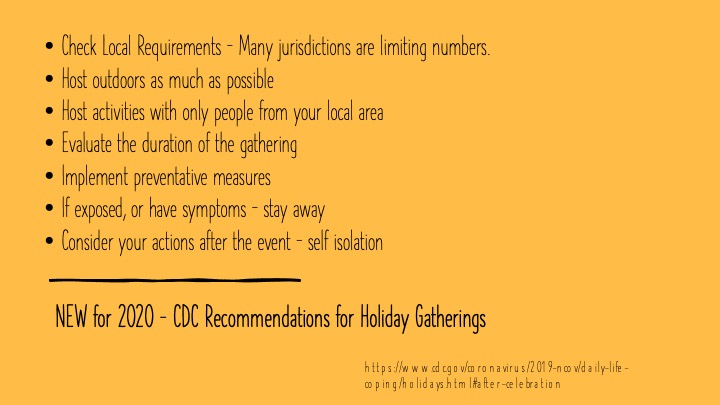
  • CHAS CHAT: Safely Preparing for the Holidays

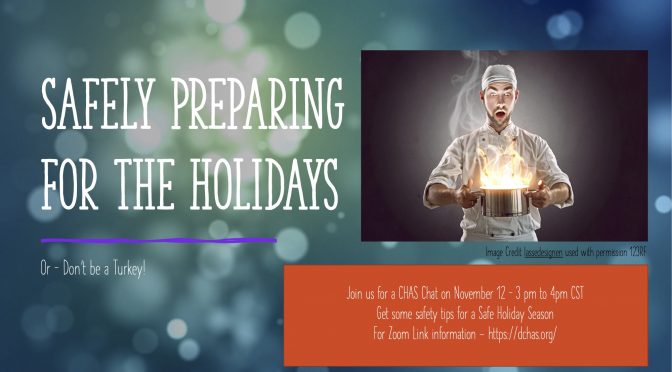
    CHAS CHAT: Safely Preparing for the Holidays

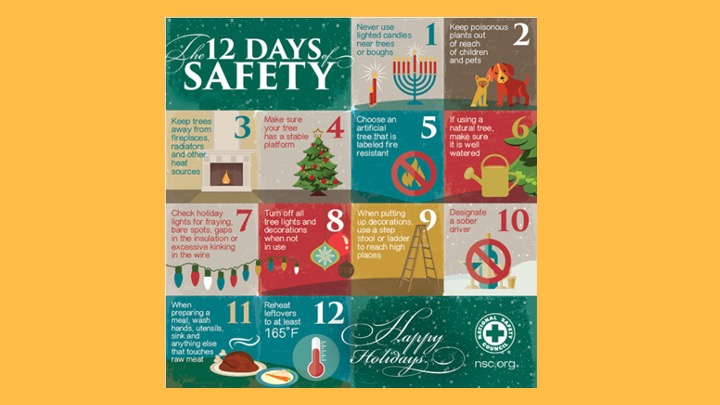
    On Thursday, November 12th, Frankie Wood-Black, Principal of Sophic Pursuits hosted a CHAS chat discussion on Chemical Safety: Safely Preparing for the Holidays

    You can review the recording of the video here.

    The powerpoint slides Frankie used are below:

  • Safety Culture & Communication: Safety Journal Club Discussion, Nov 10, 2020

    Safety Culture & Communication: Safety Journal Club Discussion, Nov 10, 2020

    Led by:
    Dr. Anthony Appleton
    Colorado State University

    Resources discussed in the talk:

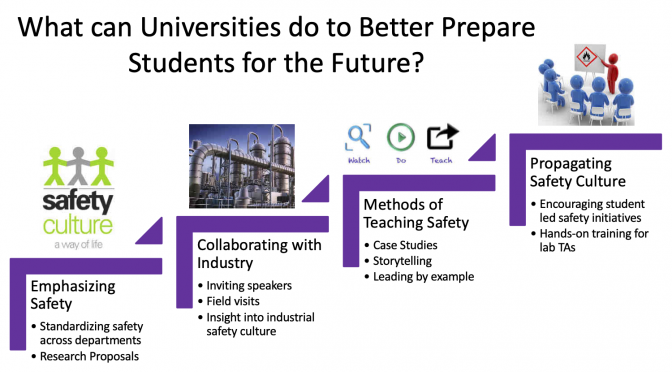
    Dr. Anthony Appleton’s introductory talk

    • Love languages: learning about these can help you communicate better with different types of people
    • Think about who you learned research from and how that influenced how you do it
    • I learned from key mentors:
      • Communication was one of the most important things about research
      • The importance of building relationships in the safety sphere
    • I learned how the building operated and how that impacted the other workers in the building
    • At Stanford University, my lab moved to a new building. I had to learn how to interact with the Fire Department, city officials, architects, and had to manage chemical inventory.
    • Generation Accident: An important question that needed to be considered after the death of Sheri Sangji – who calls her parents?
    • Researchers are on the front lines; the Executive Capacity don’t necessarily know how to help you in the best way – and you may not know how to communicate with them.
    • At CSU, was seeking to answer: Who do you talk to? How do you do it?
    • Recognized that someone needs to translate between the researchers and those who should be supporting them
    • Now have Safety Teams organized with faculty or staff AND graduate students – currently organized into MS Teams and hold monthly meetings to communicate with one another

    General Conversation

    • Question: How did you find your acceptance at the lab level when coming into this new position at CSU?
      • Answer: Everyone read my title and thought “he’s the safety guy.” They thought it was another compliance unit and they brushed me off. To overcome this, I reached out to meet with people in relaxed situations (e.g. over coffee) and said, “Let’s talk. What can I do to help you? And I can’t get you into trouble.” Also, I answer directly to a VP. In discussing safety culture, I also realized I needed to explain to people that safety is an expansive concept that goes far beyond chemical compliance (e.g. sexual harassment, construction).
    • Question: Do you have any suggestions from your experience for fostering safety at the undergraduate level?
      • Answer: When exploring improving undergraduate labs, realized that each lab class functioned as a silo. No one wanted anything added to their curriculum. Now working on a project focused on teaching labs generally.
      • Pay attention to where your student go. For CSU, #2 destination state is California, so we are working to incorporate education on Cal OSHA.
      • Trying to work on updating classical classes. Realize that people have worked on this curriculum for years so it can be tough to walk in and say “hey, you are missing something from your curriculum.”
      • CPT is working on next set of safety guidelines for undergraduates.
    • When working to shift safety culture, snag new faculty before anyone else and start with examining your onboarding process. Everyone says they hate their onboarding – find out why and fix that.
    • I can’t walk into every research environment and command respect – but I can walk in with a specialist who can.
    • All researchers need help – and when they figure out you’re not going to ding them for it and that you are actually going to help, they are much more open.
    • At CSU, we designed a single website that puts contacts and safety info in one place: https://www.research.colostate.edu/research-safety-culture/
    • When you feel appreciated, you give back to your school.
    • Check out the University of Utah report in order to see how the responsibilities of Executives has now been defined by a governmental body.
    • Question: Who is predisposed to be a champion? How do you find those 1st people?
      • Answer: That’s in the conversations. Start talking to committees. See who they identify and respect as the true powerhouses. This will take some digging. Meet those people casually and one-on-one (i.e. don’t meet in the office or in front of senior management of the university).
  • Supporting Scientists by Making Research Safer: Safety Journal Club Discussion, Nov 4, 2020

    Supporting Scientists by Making Research Safer: Safety Journal Club Discussion, Nov 4, 2020

    Led by:
    Imke Schroeder, Ph.D.
    UC Center for Laboratory Safety ,UCLA

    Dr. Schroeder’s presentation can be downloaded here:

    The papers she shared:

    CONVERSATION HIGHLIGHTS

      • How was the survey conducted?
        • Worked with other university’s EH&S Departments; data directly sent to Imke’s Team; encouraging emails to complete the survey; stopped collecting data when N is representative of the campus; greatest response rate associated with asking researchers in-person to complete the survey
      • Speak to relevance of findings for the challenges for promoting responsibilities associated with undefined risks (DURC).
        • How to train researchers to think about this.
        • Imke has no focus on DURC, but they did look at attitudes
        • How accepting are researchers of safety policies?
        • Could be embedded with an ethical question.
      • The phrase “safety takes priority” was used here whereas Dupont states “Safety and productivity are of equal value.”
      • There is a difference between the rules and the tools; we use the RAMP model to train researchers to think critically about their work; “push” information out based on need, but also provide resources so that there is something there when the researcher “pulls” for information
      • Should not put safety and productivity at odds; “safety with”… Instead of “safety first, then…”; think of the value-add of working safety and productivity together
      • Safety and productivity are the same problem framed differently
      • Reaching for accurate risk perception
      • Risk perceptions vary from person to person (it’s very personal)
      • We delude ourselves that there is one “best risk perception”
      • Who resolves productivity vs safety? Safety should take priority in cases where there is a conflict. This is our ultimate responsibility.
      • Imke mentioned how big the influence PIs have on research safety in the lab; when a student moves from training with a PI that maintains a strong safety culture, and then the student graduates and moves on to a place with a weaker safety culture, how does that experience translate?
      • If a PI emphasizes safety, the lab is much easier to work with for safety professionals; these PIs think about research safety as training their trainees to be safer and better researchers in the greater research community; the emphasis is on professional development, not just about being safe in this particular research lab; also, I am seeing this much more among younger PIs
      • Agrees with the PIs correlation on safety
      • Does anyone know if any students trained in these “strong safety culture” labs been followed into their careers to see how they do?
      • This would be a fantastic and also very difficult project! What we are seeing is that these “strong safety culture” students are going to companies well-known for their emphasis on strong safety culture
      • It is very difficult for individuals to sustain their safety culture belief system; in one example, a person maintained a safety standard at one institution, then when they moved to another institution, they abandoned the better safety practice even though they themselves said it was better. When asked why they abandoned it, they said that the safety practice was not required at the new institution, so they didn’t do it. So was this an example of a strong safety culture or an example of more compliance rules creating a safer environment?
      • Inspiring a proactive, open-ended way of thinking of safety is more difficult than getting someone to use a particular safety device; extra challenging; Two Categories: motivations via norms and what is incentivized; Norms are important, but incentives tend to beat norms as suggested by Imke’s survey results
  • Perspectives on Safety Culture: Safety Journal Club Discussion, OCT 27, 2020

    Perspectives on Safety Culture: Safety Journal Club Discussion, OCT 27, 2020

    Led by:
    Dr. Mary Beth Mulcahy
    Editor, ACS Chemical Health & Safety

    [office_doc id=[office_doc id=4996]]

    The papers she shared:

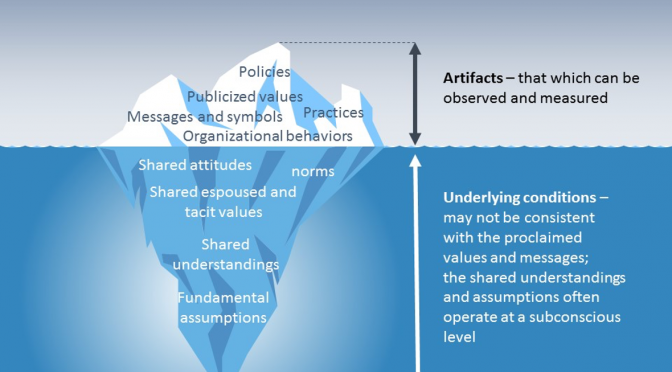
    Dr. Mulcahy introduced Edgar Schein’s Levels of Culture discussion within the field of Organizational Culture – from which the concept of Safety Culture was initially derived. Schein has a large body of work out there if you are interested in doing a deep dive. As an initial introduction to Schein and his work, I recommend you watch this video of an excerpt of an interview with him from 2016 in which he touches upon the use, and misuse, of the term “culture” and what we should actually be measuring:

    CONVERSATION HIGHLIGHTS

    Dr. Mary Beth Mulcahy’s introductory talk

    • The term “Safety Culture” gets thrown around a lot – often times to punish.
    • Edgar Schein’s levels of culture
    • Texas Tech had artifacts, but not much of the stuff below the surface
    • We don’t have a “safety culture” or a “business culture” – we just have A CULTURE. What are we doing? Why are we doing that?
    • When seeing someone at work looking off into the distance what question do you ask? “What is that person thinking about?” versus “Why is that person wasting time?” How you frame that question says something about the culture in which you reside.
    • Ask the workers why they are or are not doing something. They may have a really good reason for the “infraction.”
    • Mining the Diamond: not everything at the bottom tier will lead to a fatality, but is still important to examine.
    • Many scientists push back on safety advice saying “That’s just not how scientists work” – but sometimes the question is “is the way the scientist is doing it the right way?”

    General Conversation

    • I got into safety because as a researcher I saw these conflicts become an “us versus them” and it stops things. Now on the safety side, I realize that it is important to be vulnerable.
    • Somebody needs to be the first to lower the barrier and put ourselves out there.
    • I thought that because I had a PhD and I was a researcher that the scientists were going to be more open with me. This was not the case at all.
    • We want to be heard and understood more than we want to be agreed with.
    • Diversity of expertise is important to the safety team.
    • Difficult to get at things when their mission is compliance.
    • Every time you are dealing with someone on an issue, it is not just that issue – you are also dealing with their past 30 years of experiences they have had with similar issues.
    • It is important to realize that mistakes aren’t intentional.
    • How do we embed decision-making opportunities into the flow of a researchers’ research?
    • Language is important: instead of “this is a problem”, say “this is a learning opportunity” or “look I see an opportunity here.”

    By 3:12 PM, we had 26 participants

  • CHAS CHAT: Demonstrations and Outreach Activities

    CHAS CHAT: Demonstrations and Outreach Activities

    On Wednesday October 28th, Sammye Sigmann of Appalachian State University and Debbie Decker (UC Davis, retired) hosted a CHAS chat dicsussion on Chemical Safety: Demonstrations and Outreach Activities

    At this time of year, many groups like to engage in outreach activities. While there are likely to be fewer outreach activities this year, we thought that a informal discussion on demonstration and outreach safety might still be useful for October when so many of these events take place for Halloween.

    Among other topics, they discussed developing risk analyses documentation for a popular demonstration, the Elephant’s Toothpaste.

    The Appalachian State JHA for Elephant’s Toothpaste can be downloaded here.

    The UC David SOP for this demo can be found here

    You can download a PDF of the powerpoint that Sammye and Debbie used to lead the session was also recorded and is available here

    Sammye and Debbie
    — 

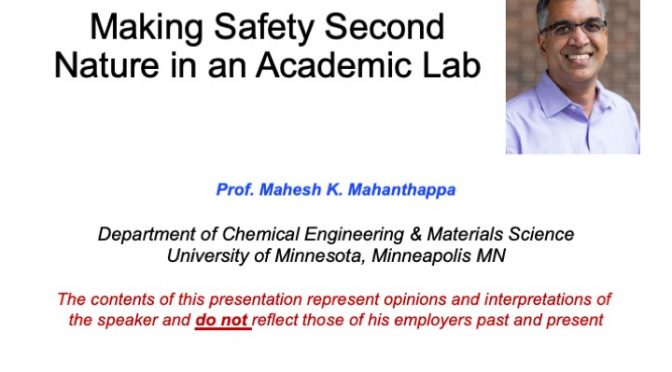
  • Making Safety Second Nature in an Academic Lab: Safety Journal Club Discussion, OCT 20, 2020

    Making Safety Second Nature in an Academic Lab: Safety Journal Club Discussion, OCT 20, 2020

    Led by:
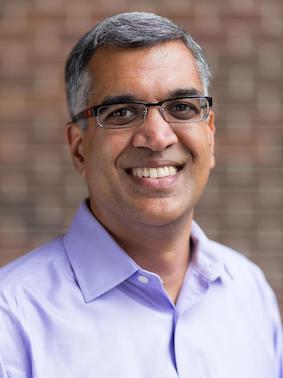
    Prof. Mahesh K. Mahanthappa
    Department of Chemical Engineering & Materials Science
    University of Minnesota, Minneapolis MN
    2020 Laboratory Safety Institute Graduate Research Faculty Safety Award Winner

    Resources Dr. Mahantappa highlighted in his talk are are: